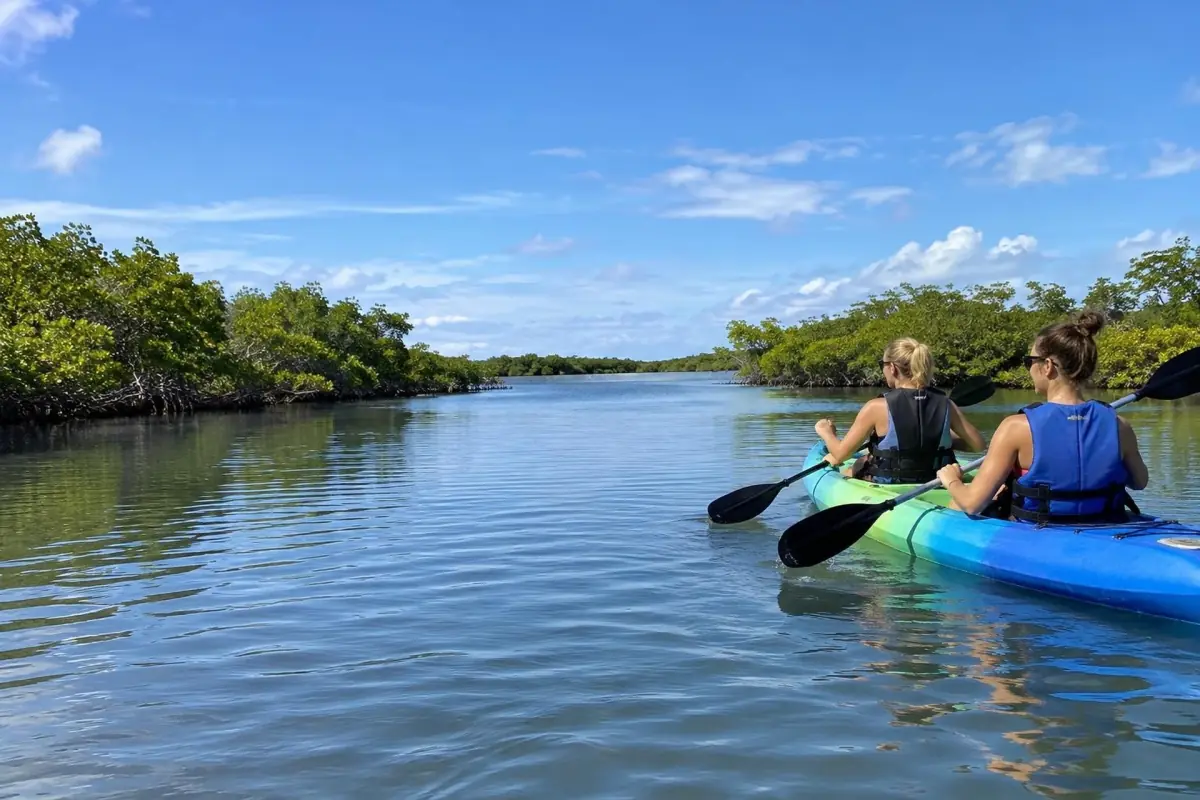
Bioluminescent kayaking near Cocoa Beach
Bioluminescent kayaking near Cocoa Beach is a lagoon outing, with launch points around Merritt Island and Cape Canaveral. The attraction is natural light in the water under suitable conditions, rather than an illuminated Atlantic beach. Dinoflagellates and comb jellies are associated with the region's bioluminescence, while the visible effect varies with conditions on the night.
The available outings use standard kayaking equipment, a clear-bottom kayak or a guided format with water and a snack. For a view through the hull, choose the clear-bottom kayak; for an outing with a guide, safety light and refreshments included, choose the guided SR 528 departure. Each option is a 1.5-hour activity, with separate arrangements for reaching its launch site.

Our picks: bioluminescent kayaking
Choose a clear-bottom kayak or a guided outing with a return voucher. The other kayak trip has two possible meeting points depending on the option; conditions determine visibility.
Hand-picked tours, booked through GetYourGuide and Viator. Prices are indicative starting prices in US dollars (as of November 2026). Tap a tour for live availability and the current price in your currency.

Clear-bottom bioluminescence kayak
- Life jacket
- Paddle
- Dry bag
The kayak has a clear bottom. Bioluminescence depends on conditions and cannot be guaranteed.
Check availability →
Guided bioluminescence kayak outing
- Professional local guide
- Bottled water and snack
- Kayak, paddle and life-jacket
If bioluminescence is not seen, the stated guarantee offers a return voucher valid for three years. Visibility itself is not guaranteed.
Check availability →
Bioluminescent kayaking experience
- All kayaking equipment
- Life jackets
- Paddles
Choose a tour option and check its meeting point. Bioluminescence depends on conditions and cannot be guaranteed.
Check availability →Night paddles and clear-bottom kayak choices
Compare a variant-based lagoon departure, clear-bottom kayaking from Kiwanis Island and a guided outing meeting beside SR 528 near Cape Canaveral.
Lagoons rather than the Atlantic beach
The Space Coast's bioluminescence areas include Mosquito Lagoon, Banana River and Indian River Lagoon. Planning a paddle therefore starts with the waterway and launch point. A beach access in Cocoa Beach serves a different kind of day from an evening kayak meeting point on Merritt Island. The wider Cape Canaveral guide separates beach visits from lagoon activities.
The kayaking equipment option includes a kayak, paddle and life jacket and has two possible meeting points according to the chosen variant. Keep that variant's location with the itinerary. The clear-bottom trip uses Kiwanis Island Park on Merritt Island, while the guided trip meeting near Cape Canaveral uses an access beside SR 528. These are distinct arrival arrangements for a similar length of time on the water.
Season and a dark sky
June to October is the broad seasonal orientation for bioluminescence in this region. A dark sky, especially around a new moon, helps make subtle light easier to perceive. Season and moonlight belong together in choosing an evening: the month, moonlight and local conditions all shape what is visible on a particular paddle.
Rain and storms can weaken the effect, and weather can cause a tour to be cancelled. The region has hotter, wetter summers and milder winter months; those broad patterns are useful for packing and planning, rather than predicting conditions at a launch site. The weather and seasons guide puts night kayaking alongside other reasons to visit. The Atlantic hurricane season runs from 1 June to 30 November, a planning season rather than a statement about any particular night's weather.
The guided SR 528 product offers a return voucher valid for three years under its visibility terms. That benefit provides a way to return under the product's terms, rather than a promise of visible light or a cash refund. A night on the lagoon remains a natural experience with changing conditions.
Standard kayak or transparent bottom
The standard equipment outing provides kayaking equipment, paddles and life jackets for its 1.5-hour trip. The clear-bottom option adds a transparent viewing area in the kayak and includes a dry bag and phone dry case alongside the paddle and life jacket. The clear panel changes how you can look into the water; the conditions still determine the light you may see.
The guided 90-minute option includes a professionally trained local guide, kayak, paddle, life jacket, safety light, bottled water and a snack. The meeting instructions place it beside SR 528 near Cape Canaveral, despite Orlando appearing in the product title. This is a local launch meeting, with the journey to that meeting point arranged separately. Use the getting-there guide for the wider road journey.
The photographs show paddling near mangroves in daylight and evening light. They illustrate the lagoon setting, while the possible bioluminescent effect is a separate night-time condition. Daytime animal observation has its own wildlife and kayaking guide, rather than being another version of this seasonal light-focused activity.
Launch sites and night access
The clear-bottom trip starts at 951 Kiwanis Island Park Road, Merritt Island. The standard equipment trip has two possible meeting points tied to its variant. The SR 528 meeting follows the eastbound road towards Cape Canaveral, with the kayak trailer reached by the access beside the road after the bridge beyond Exit 52. Use the selected trip's precise meeting instructions for the final approach.
Merritt Island refuge roads, trails and ramps generally operate from sunrise to sunset, with Bair's Cove and Beacon 42 as exceptions for night launching. Those exceptions do not extend night access to every refuge ramp. In the refuge, rules updated on 2 November 2026 prohibit feeding, attracting or disturbing animals, alongside camping, fires, drones and motorised activities such as airboats and personal watercraft. Leave wild animals untouched during a paddle.


Questions about bioluminescent kayaking
When is the seasonal window for bioluminescence?
June to October is the broad seasonal window used for the region. A dark sky helps the light stand out, while rain and storms can reduce visibility. The month is therefore one part of planning an evening, alongside moonlight, local weather and the actual launch arrangements of the chosen trip.
What affects how much light is visible?
Darkness, weather and the natural conditions in the lagoon affect the visible bioluminescence. Less moonlight makes subtle effects easier to perceive, while rain and storms can weaken them. A transparent kayak bottom offers another viewing angle into the water, but the same natural conditions govern the effect around the boat.
Where does the clear-bottom kayak trip begin?
The clear-bottom trip begins at 951 Kiwanis Island Park Road on Merritt Island and lasts 1.5 hours. A paddle, life jacket, dry bag and phone dry case are included with the kayak. The standard equipment trip has variant-dependent meeting points, while the guided SR 528 outing meets near Cape Canaveral.